As a computer science student, biomedical research wasn't something I ever expected to get into. But I wanted to try something outside my usual lane and learn from it, so I applied. That's how I ended up at the ICDCU bioinformatics lab, working on a research project management system built for Cincinnati Children's Hospital.
I started with the basics: reading scientific papers and presenting on different research topics. It was slow going at first, but reviewing papers and explaining them back to the team was how I learned the way research actually works. It was my first real introduction to the field.
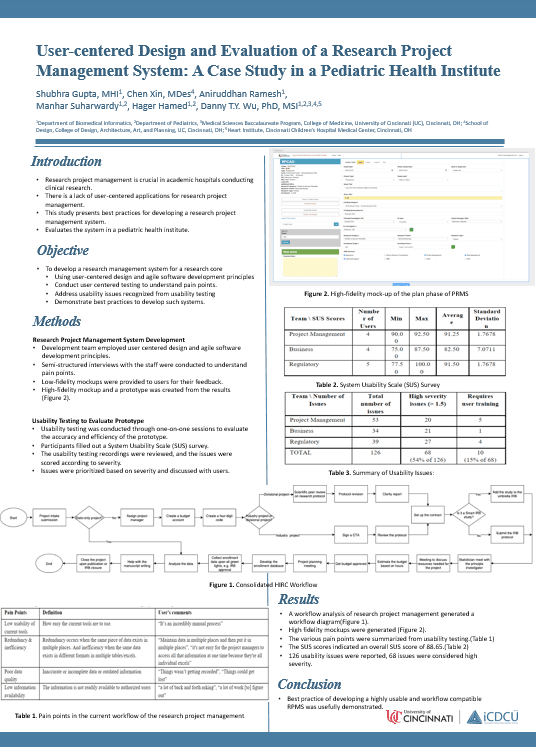
Once I had my footing, I joined the research and tech teams building the system itself, called HIRConnect. The hospital runs a huge number of clinical research projects at once, all with tight budgets and deadlines, and HIRConnect was meant to help them allocate limited resources and actually get those projects across the finish line. We built it using user-centered design and agile development.
Building it meant working closely with the hospital staff so the tool fit how they actually worked. We put together prototypes and ran one-on-one usability testing sessions, and my job was to fix the problems those sessions surfaced and improve the interface and accessibility of the portal.
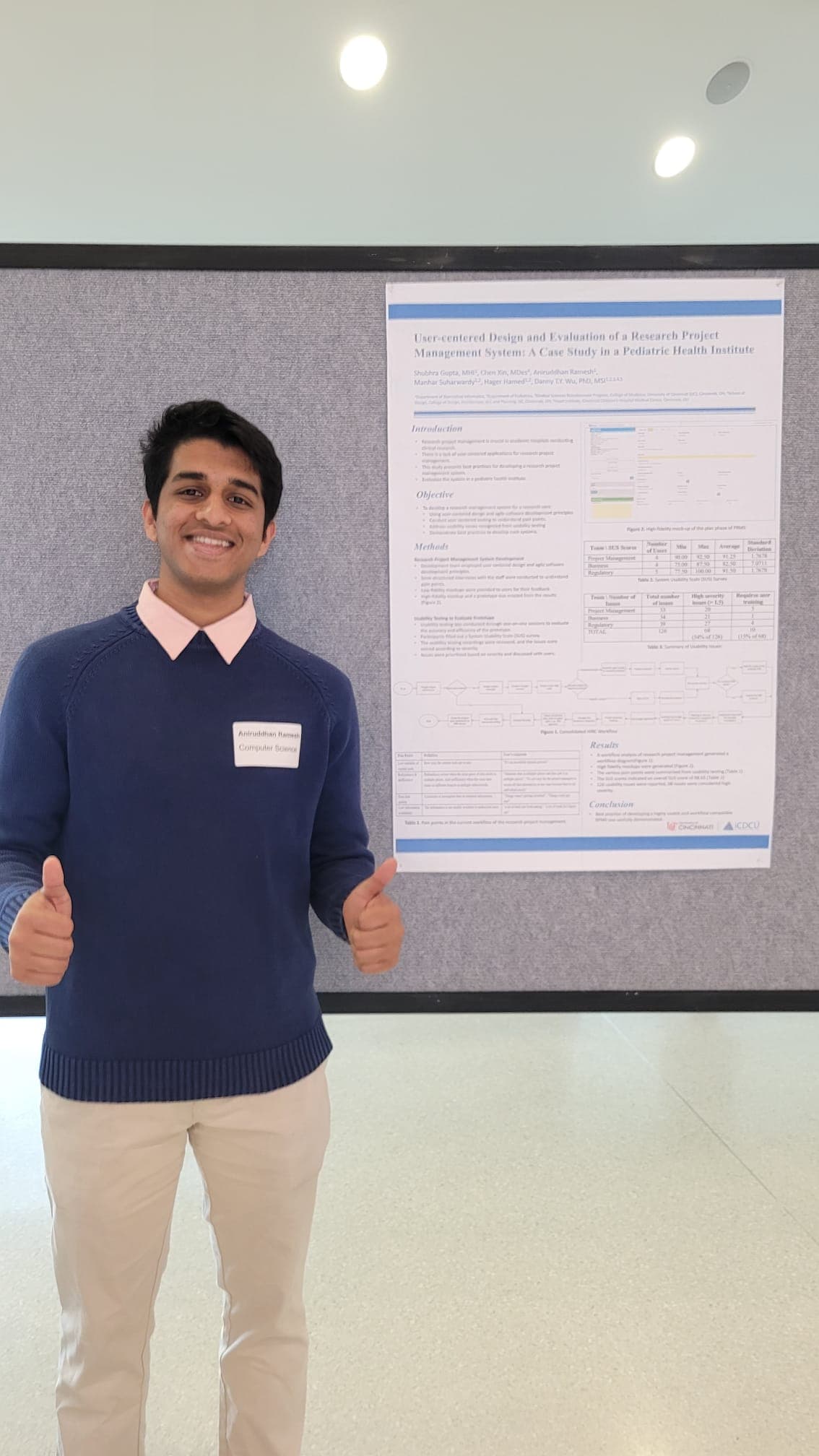
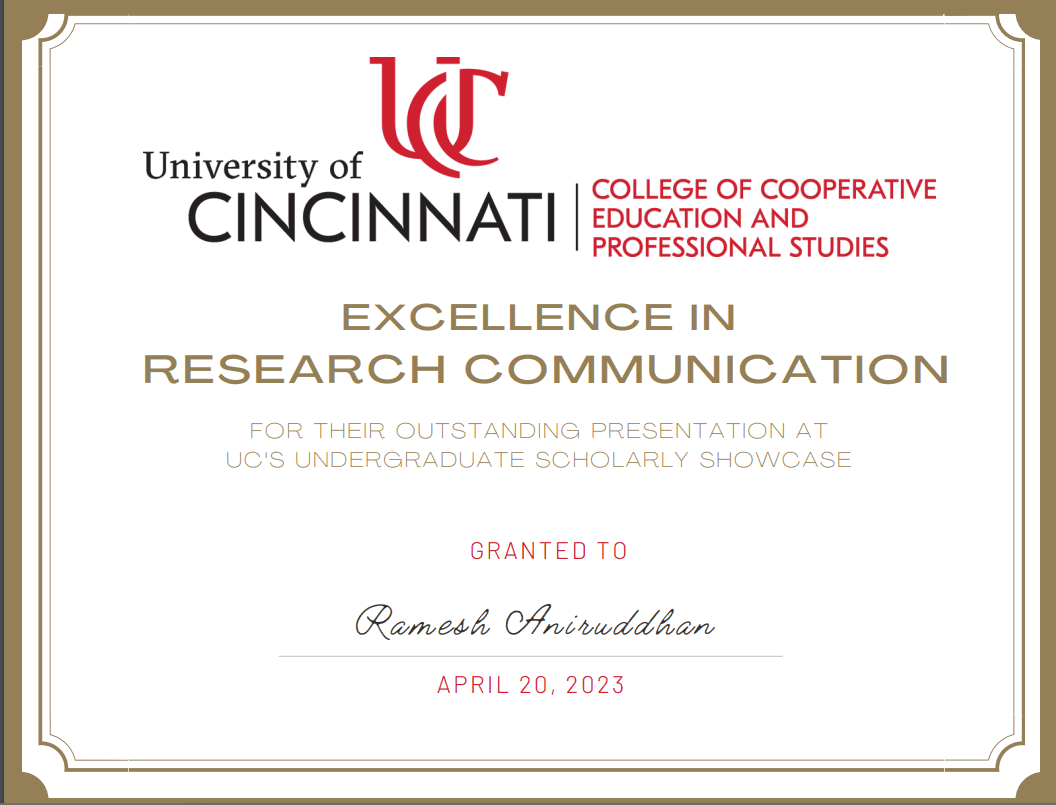
Alongside the development, I worked on the research behind it: how you build complex applications like this well, using agile development and user-centered design. I co-authored a research paper and podium presentation that we submitted to the AMIA 2023 conference, and I presented a poster at the Undergraduate Scholarly Showcase, where I was awarded "Excellence in Research Communication."
Seeing other students' work at the showcase was what made me want to keep going with research.